
We study how complex structures emerge in soft matter, from colloidal particles and phase-separating mixtures to materials grown by living organisms.
Microbial fabrication of ordered soft matter
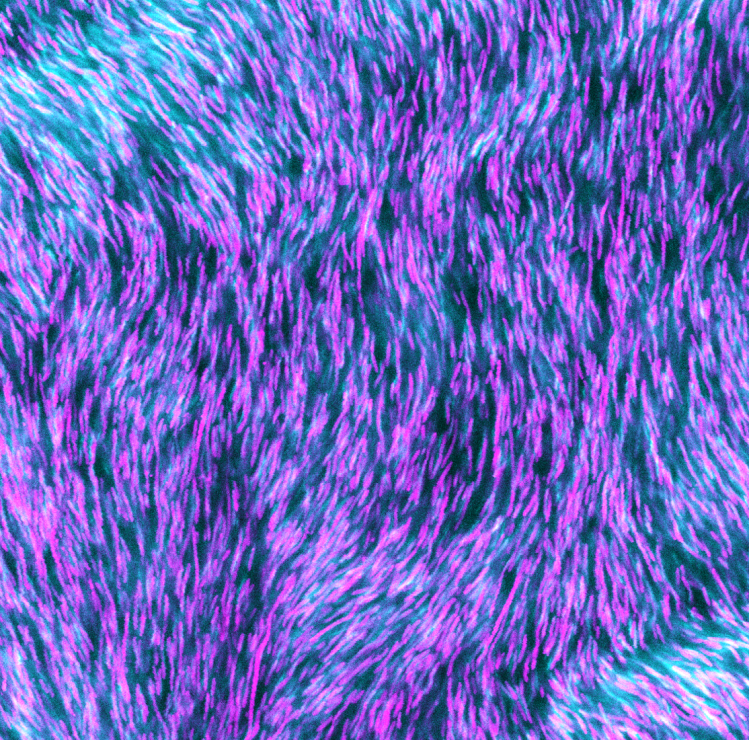
How do living organisms organize materials as they grow? We investigate how microorganisms, particularly cellulose-producing bacteria, generate complex structures through the interplay of biological activity and physical processes. Our goal is to understand how growth, collective organization, and mechanical constraints determine the emergence of order in living and biofabricated materials. With these principles we aim to grow sustainable, scalable and functional materials with controlled structures and properties.
Phase separation in soft and elastic materials
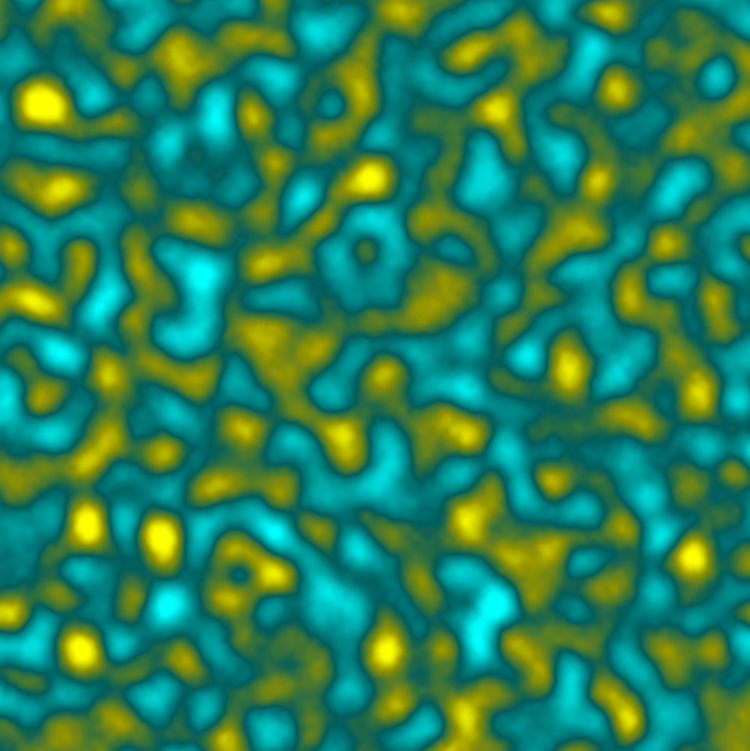
How do mechanical constraints influence phase separation? We investigate how distinct phases emerge, evolve, and organize within soft materials, particularly polymer networks and elastic environments. By exploring the interplay between thermodynamics, elasticity, and dynamics, we aim to uncover the physical mechanisms governing pattern formation and structural evolution in phase-separating systems. Understanding these mechanisms could open new routes to controlling the internal structure and properties of soft materials.
Colloidal self-assembly of anisotropic particles
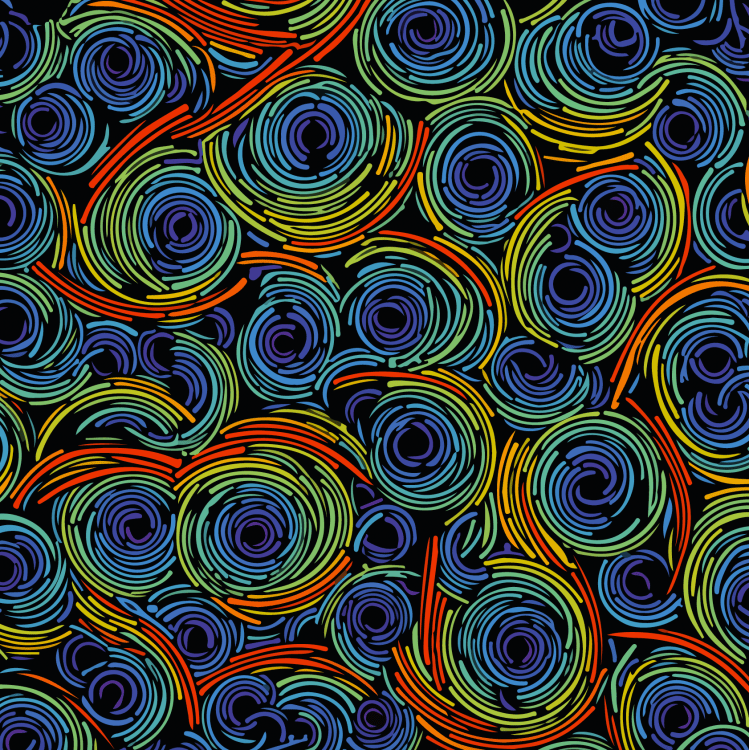
How does particle shape influence the organization and behaviour colloidal materials? We synthesize and study a variety of anisotropic colloidal particles that serve as model systems for understanding liquid-crystalline order, ubiquitous in biological systems and technological applications. We investigate how particle geometry and interactions give rise to different liquid-crystalline phases, and how these particles interact with liquids, interfaces, and deformable soft materials such as membranes.

